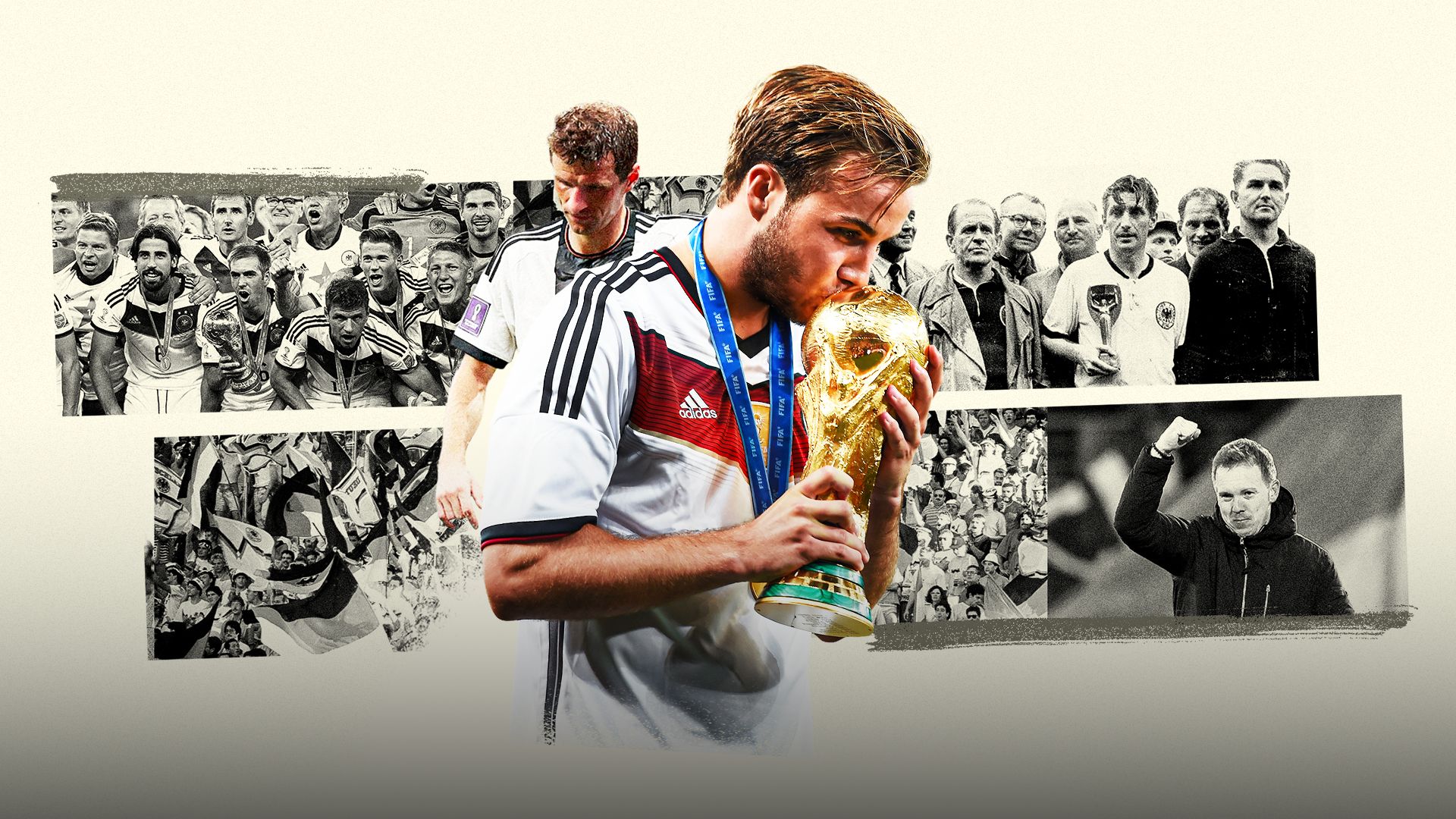
This is a clear signal that German football wants to be itself again, so to speak. Not a copy nor a stylistic imitator, but a team with its own character. It is no coincidence that Nagelsmann repeatedly spoke of “workers” in this context, players who are willing to sacrifice themselves for the collective. He wants characters who may be less brilliant technicians but have stronger personalities. This attitude is in the tradition of those teams that once commanded Lineker’s respect.
Nagelsmann has already called upon Bayer Leverkusen’s Robert Andrich, Brighton midfielder Pascal Gross, and Grischa Promel from Hoffenheim to be his ‘workers’. Borussia Dortmund’s Waldemar Anton and Nico Schlotterbeck, are also among them, but both still have to establish themselves in the Germany team. Joshua Kimmich and Leon Goretzka, who are part of the regular squad, as well as Jonathan Tah from Bayern Munich, have joined Antonio Rudiger and RB Leipzig captain David Raum in taking this step, too.
Nagelsmann’s definition of a “worker” refers to players who stand out for their running strength, tackling and tactical reliability. They are less responsible for creative moments and more for stability, security and maintaining the team structure. Andrich, Gross and Promel embody this kind of player because they close down space, seek out tackles and maintain their presence even in phases of high intensity.
The Dortmund duo of Anton and Schlotterbeck, along with established centre-back pairing Tah and Rudiger, bring physical robustness and anticipation to the defence, representing reliability and strong communication skills. Kimmich and Goretzka are important in midfield thanks to their positioning, running and leadership roles. For Nagelsmann, these players are central components of a functional team that is less focused on individual brilliance and more on collective work and resilience.
At the same time, Nagelsmann recognised that mentality is created through structures and leadership. Ideally, it should lead to psychological stability among the players, which can then be converted into playful ease on the pitch.
“What’s important is that other teams perceive us as a footballing nation again. In general, I want us to get on the bus and drive to the game with everyone thinking: ‘Of course we’re going to win today, we’re Germany, we’re a footballing nation, we’re going to win’,” Nagelsmann explained to Sport focus just over a year ago.