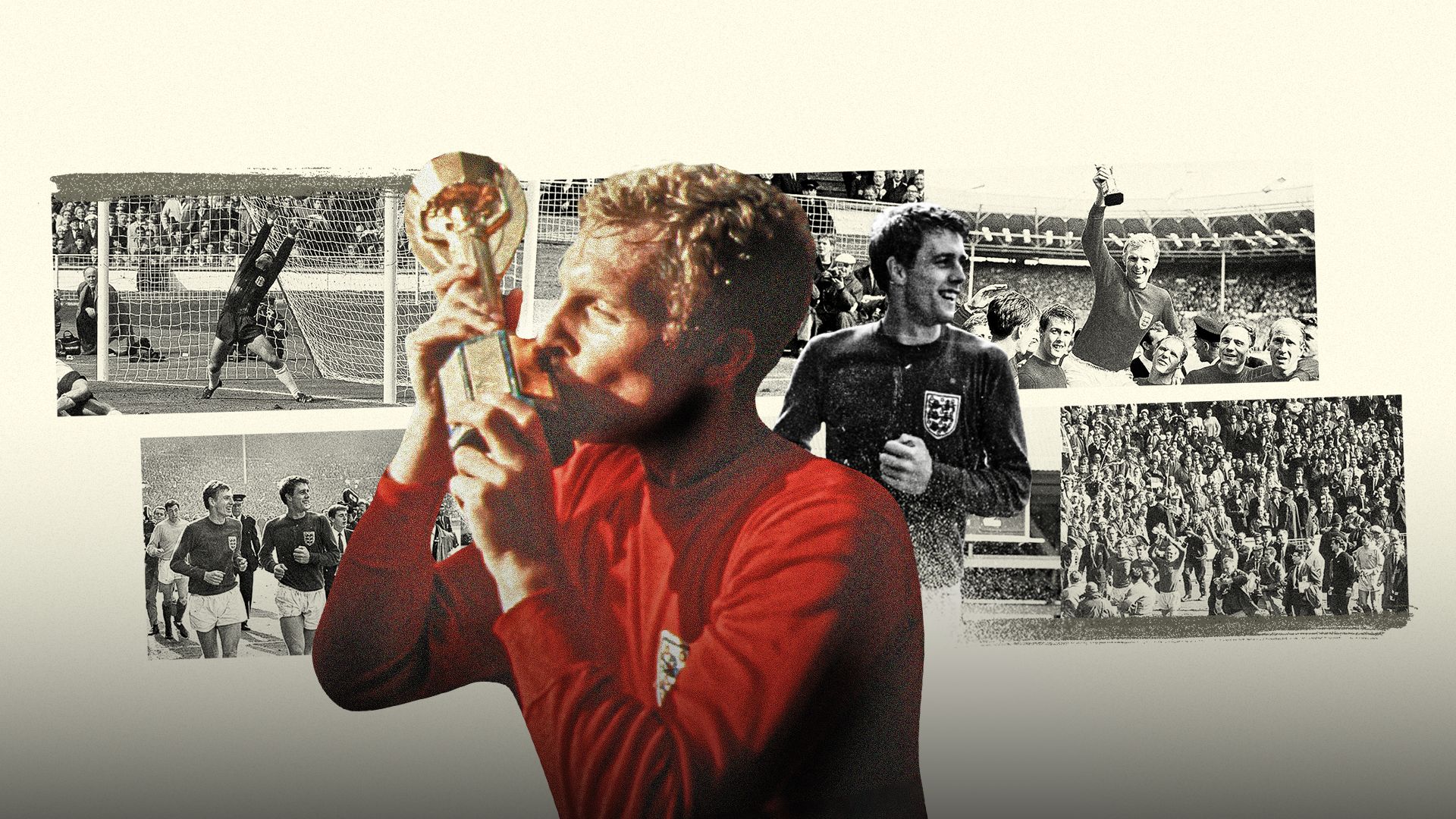
Portugal, containing tournament top scorer Eusebio, were England’s semi-final opponents. It was a less fiery game than the previous round, but England brought the heat on the pitch, especially Bobby Charlton, who scored in each half, the second courtesy of a lay-off from Hurst. Between the two Charlton goals, Gordon Banks had denied Eusebio with a wonder save.
Bobby’s older brother, Jack, had his say down the other end of the pitch, committing a deliberate handball to stop Portugal scoring. Eusebio converted the penalty, but England advanced to the final against West Germany.
It was 21 years since the end of the Second World War, and while it was not exactly fresh in the players’ minds, it was hard to forget. Stiles, for example, had been born during a bombing raid of Manchester, and Peters had been evacuated while members of his wife’s family were killed by a bomb during The Blitz.
“The recent past was there, whether we liked it or not,” recalled Hurst. “For us, for them, for the crowd.”
Hurst’s father-in-law was a paratrooper in the D-Day landings and he had a good feeling about the game, telling people around him that the striker was going to score a hat-trick. But England got off to a rough start when Ray Wilson headed a cross straight to the feet of Helmut Haller, who gave West Germany the lead.
England did not panic and six minutes later, Hurst scored the first goal of his eventual treble courtesy of another West Ham connection, heading in a quickly-taken free-kick by captain Bobby Moore. Peters, who was nicknamed ‘The Ghost’ for his ability to appear out of nowhere, pounced after a Hurst shot deflected into the air to put England on the brink of victory, only for Germany to equalise in the 89th minute when Wolfgang Weber bundled the ball home during an almighty penalty box scramble.